What we observed
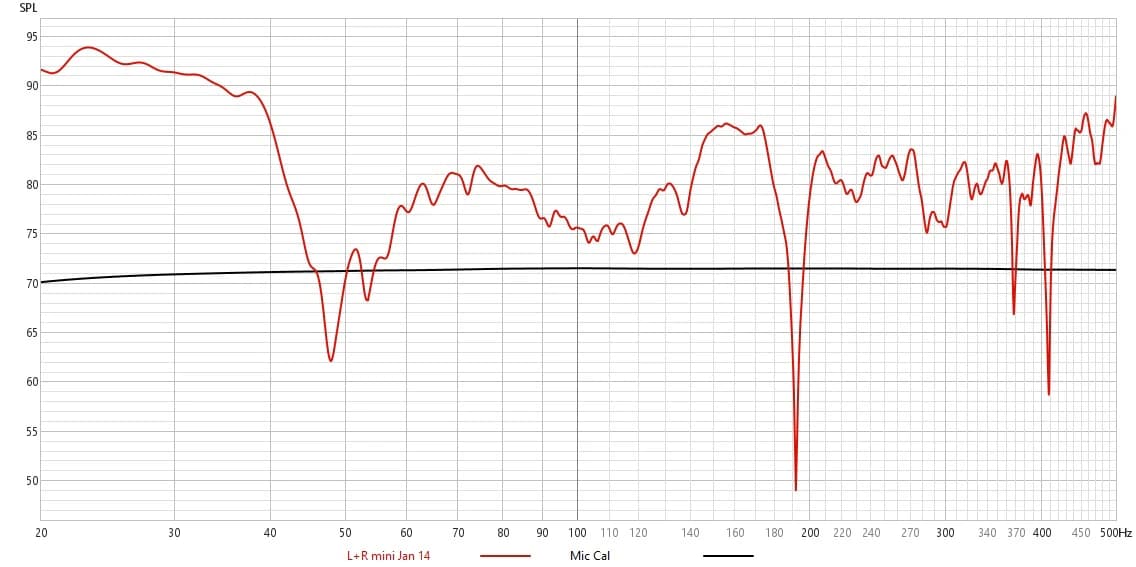
In one measured living room, both speakers playing together produced less output near 74 Hz than either speaker alone.

REMOTE REW ANALYSIS · AUSTRALIA-WIDE
Unsure which peak, dip or lingering bass deserves attention first? MSN Audio reviews your original REW data, explains what the evidence supports and puts the next tests in a useful order.
For listeners with a calibrated microphone who can complete the nine required sweeps.
Human-reviewed, not automated. No product purchase is required.
WHO THIS IS FOR
You have invested time in learning REW and capturing your system. The next challenge is deciding which observations matter, which explanations are supported and what to test first.
WHAT YOU RECEIVE
Delivered by email within five business days after we receive the complete .mdat file and room photos.
The report may conclude that placement, another measurement or an adjustment to existing equipment should come before any product purchase.
AN EXAMPLE OF INTERPRETATION
In one measured living room, both speakers playing together produced less output near 74 Hz than either speaker alone.
That baseline alone does not confirm the cause or show which adjustment will help. It does not demonstrate an improvement.
Check the relevant speaker and listening-position relationships. Change one thing at a time and remeasure before deciding what to keep.
Interpretation example from the real measurement set dated 16 September 2026. This is a baseline illustration of the approach, not a customer deliverable from the $149 service or a promise of identical tests or report length.
See the source measurement exampleREAD THE SET AS A SYSTEM
We compare the measurements as a set. Consistent observations, channel differences and the limits of the available data all matter to the advice.
Compare the left, right and combined system response from 20 Hz to 20 kHz, with separate 500 Hz to 15 kHz sweeps for broad tonal consistency.
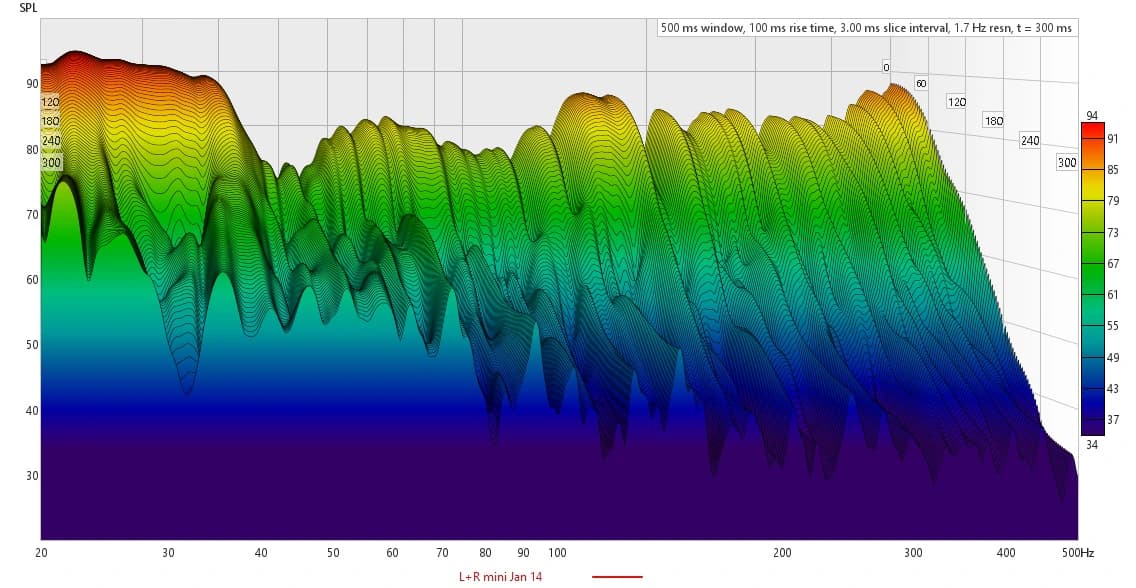
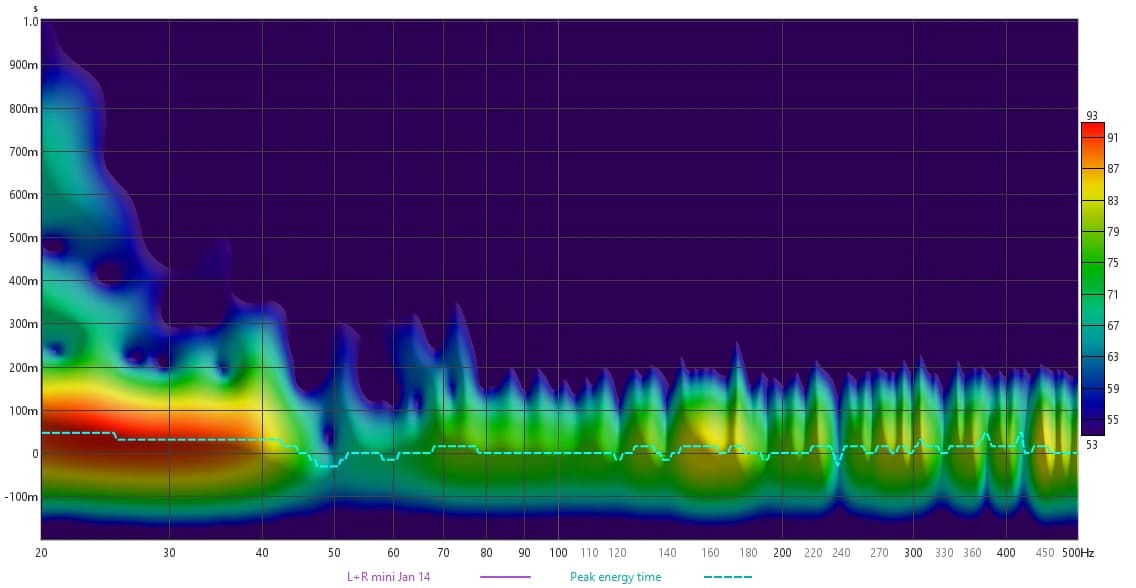
Use the 20 Hz to 300 Hz set to investigate peaks, dips and how energy persists, distinguishing observations from possible causes.
Prioritise useful checks such as placement, repeat measurements or existing-system settings. Further treatment, DSP or on-site investigation should follow the evidence.
THE MEASUREMENT METHOD
After payment, MSN Audio emails the exact naming and submission instructions. All nine measurements must be taken from the same main listening position, with the microphone and system settings kept consistent.
| Frequency range | Both channels LR | Left only L | Right only R |
|---|---|---|---|
| 20 Hz to 20 kHz | Both channels LR | Left only L | Right only R |
| 20 Hz to 300 Hz | Both channels LR | Left only L | Right only R |
| 500 Hz to 15 kHz | Both channels LR | Left only L | Right only R |
Save the nine measurements in one original .mdat project file. No additional REW traces, screenshots, PDF exports or CSV files are required.
Include photos showing the room layout with your original .mdat file, keeping people, house numbers and sensitive personal items out of view. Existing measurements must also meet this specified format.
FROM PAYMENT TO FINDINGS
Complete payment through the secure MSN Audio payment page.
A detailed email is sent automatically to the address used at checkout.
Complete the nine measurements and reply directly to the email with the .mdat file and room photos attached.
MSN Audio manually reviews the evidence and sends the completed findings by email.
For Melbourne listeners who want someone to listen, measure and test practical changes on site, explore the in-home service. Both speaker-only and speaker-plus-one-subwoofer visits include a detailed analysis report.
Explore in-home measurementFAQ
Yes. The remote service is intended for clients who already own a suitable calibrated measurement microphone and can run REW on a computer.
No. Screenshots can hide measurement settings and underlying information. The original REW .mdat project is required.
The fixed set provides full-range, low-frequency and mid/high-frequency views for both channels together and separately. It keeps the review consistent and avoids large projects containing unrelated or duplicated traces.
Yes. Keep the system in the same normal listening configuration for all nine measurements and state whether the subwoofer and room correction were active.
This standard review analyses the combined system-and-room behaviour. It does not include separate sub-only and main-speaker measurements or a full subwoofer-integration calibration.
No. The .mdat is reviewed manually by MSN Audio.
MSN Audio will identify the affected measurement and ask you to repeat it before the review begins.
The Melbourne in-home service is likely the more direct option. MSN Audio brings the calibrated measurement equipment and creates the required data in your room.
No. The purpose is to identify the best-supported next step and the limits of the available evidence, not to promise a predetermined product outcome.
A CLEAR NEXT STEP
Use your original measurements to understand the priorities, test a useful change and decide what deserves further attention.
Purchase REW review