Every case starts with a real listening problem, then follows the room, system, measurement and change that came next. You can see the graphs, understand the audible effect and judge whether the same approach might be worth testing in your own system.
No two rooms behave exactly the same. That is why we show the result in context, and why the next step is always to test your own room.
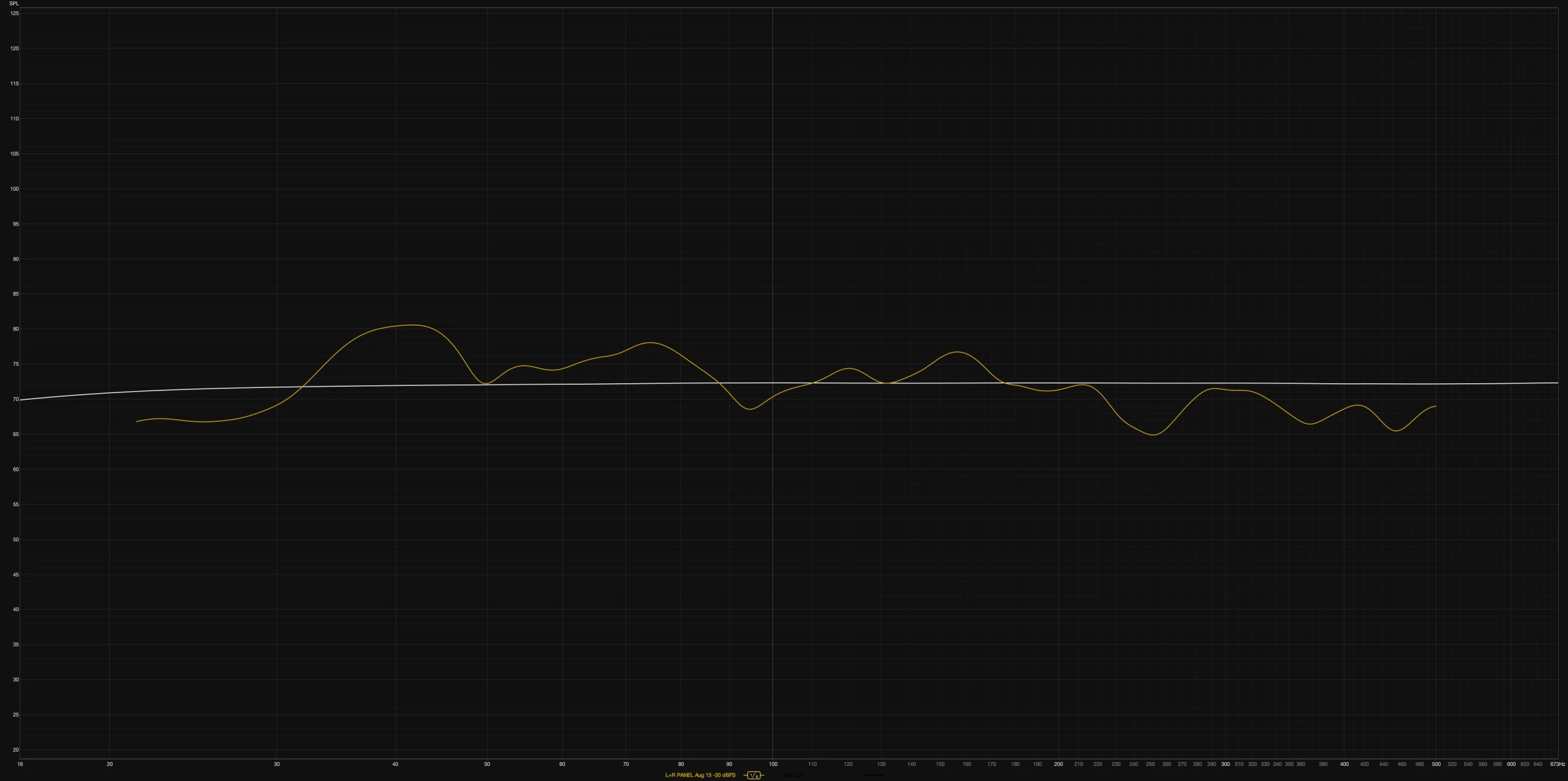
AVAA C214 in a real Melbourne room: what the REW measurements showed
The dominant 40–45Hz peak fell by roughly 5–7dB, while the 75–85Hz decay tail shortened from about 650ms to roughly 265–370ms. The important part is what those changes mean for bass definition, impact and the rest of the system.
Enough context to understand the result, not just a flattering graph.
We show the starting problem, the relevant system and room context, the measurement method, the change that was made, the result and anything that still matters afterwards. You get enough detail to judge whether the same approach deserves consideration in your own room.
YOUR NEXT STEP
Want to know what the same approach would do in your room?