
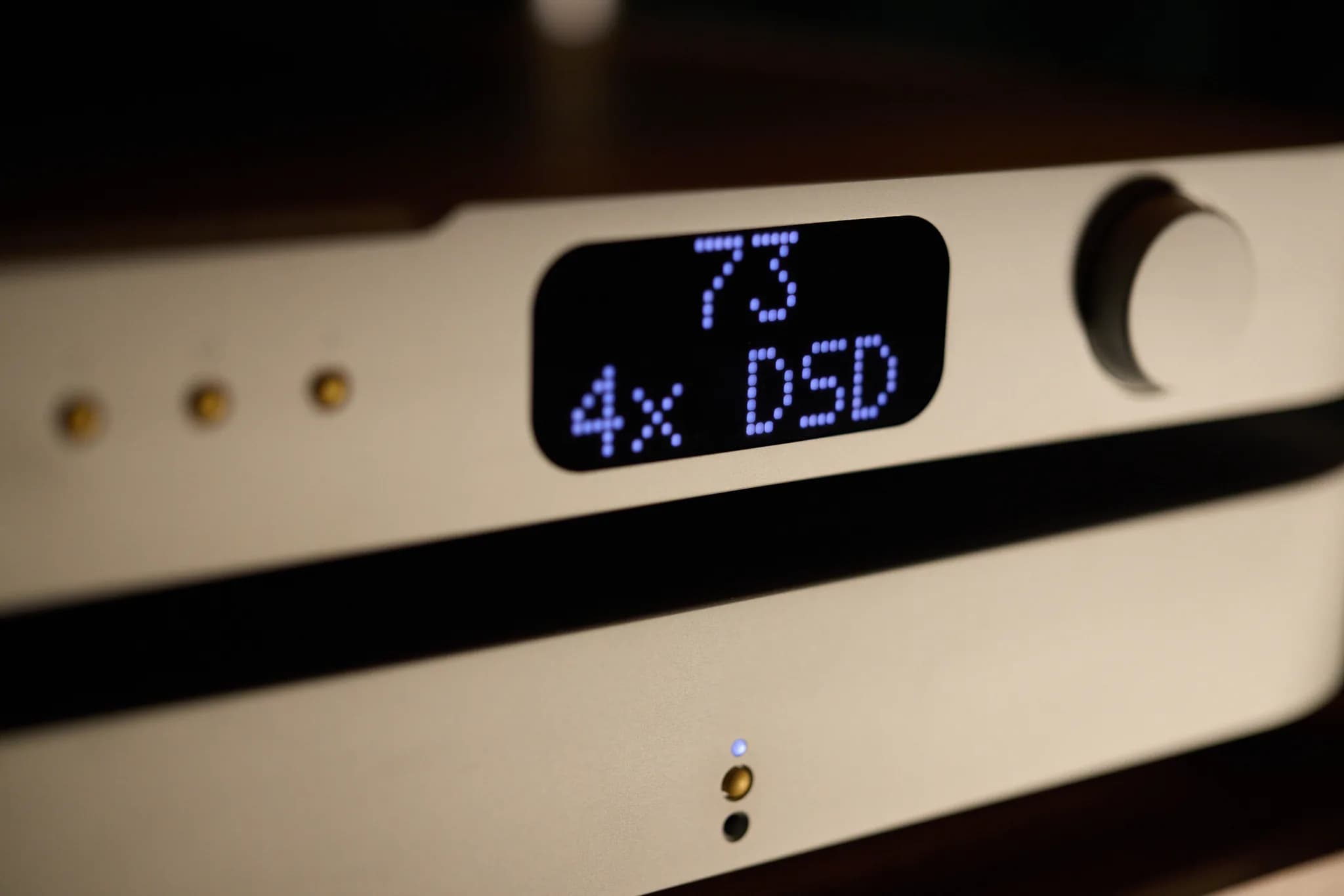
The decisive comparison was not tonal
When the Reference first played through the Burmester’s preamplifier section, it sounded clean, stable and controlled. Bypassing that stage did not create a crude tonal swing. The presentation remained naturally warm and physically grounded.
What changed was the relationship between small events. Fine dynamic movement became more continuous. Reverberation was less easily flattened into a generic sense of ambience. The force applied to a note and its consequence became easier to follow.
The following observations therefore describe the Reference driving the power-amplifier stage directly. That was the connection in which its character became clearest to me; another amplifier may call for a different arrangement.
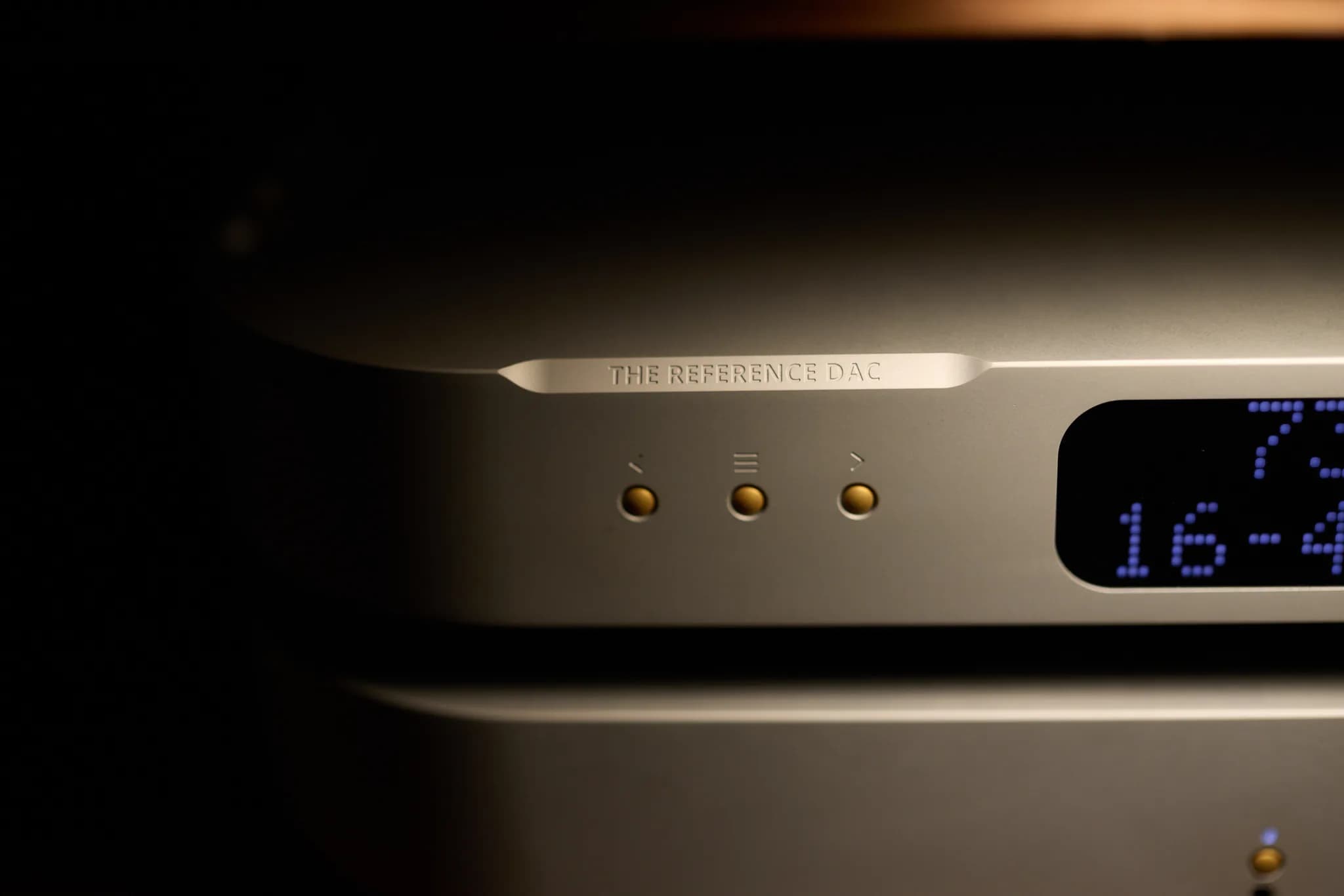
Transparency without added brightness
Some products create an immediate impression of resolution by emphasising leading edges, upper harmonics or recorded noise. The Reference did not sound transparent to me because it made the treble conspicuous.
Voices retained breath, mouth shape, chest resonance, microphone distance and room contribution without turning sibilance into a demonstration. A violin carried bow texture, body resonance and changing harmonics while keeping a believable tonal centre. Warmth did not feel like a thick colour applied to every recording; it felt like the natural result of leaving more of the recorded material intact.
That distinction matters over long sessions. Information can be abundant without the presentation becoming etched.

Microdynamics are changes within an action
I once treated microdynamics as the discovery of a very quiet sound: a percussion instrument hidden in the mix, a breath before a phrase, a chair moving in the studio.
The Reference made me listen more closely to variation inside an action.
A violinist’s vibrato is not a mechanical oscillation. The finger contacts the string, pressure changes, speed varies and control is released and re-established. A piano note is not only the instant of impact; touch velocity affects the hammer strike, then the string and soundboard develop the energy. A drum hit includes the stick, the skin, the enclosed air and the room responding in sequence.
When those stages remain connected, the system communicates technique without turning the performance into a collection of magnified fragments.
Air is the continuation of energy
“Air” is often treated as another name for extra high-frequency energy. My experience with the Reference was different.
Take a plucked string. The initial transient is only the beginning. The string continues to move, the instrument body redistributes energy, reflections form in the recorded space and the sound gradually falls away. If that time process is truncated, the note can be precise yet strangely incomplete.
With the Reference connected directly, I found it easier to follow what happened after the pluck. Images remained tangible, but their edges were not cut away from the space around them. The soundstage was valuable not because it appeared artificially wide, but because sources, distance and decay belonged to the same acoustic event.

Bass speed depends on the stop as much as the start
The Reference did not manufacture speed by hardening the front of every bass note. It clarified attack, pitch, duration and the silence that followed.
On Michael Jackson’s Billie Jean, the kick drum and bass line can merge into a broad mass of low-frequency energy in some systems. In my room, the Reference helped their roles remain distinct: the drum had impact and recovery; the bass retained pitch and elasticity; the space between them supported the groove.
This outcome cannot be assigned to the DAC alone. Amplification, loudspeakers, REL integration and room decay were all essential. Once those variables were sufficiently controlled, the source was less likely to obscure the timing already present in the recording.
When detail becomes emotion
In Flight of the Bumblebee, I used to focus first on speed and virtuosity. Through the Reference, I was more aware of panic, density and forward pressure. The number of notes had not changed. Their dynamic and temporal relationships were simply easier to understand.
The storm in Vivaldi’s Summer offered a similar lesson. Before the release, bow speed, force, pause and harmonic tension accumulate. A system can outline every note and still leave the sequence emotionally flat. When the build-up remains continuous, technical detail stops calling attention to itself and becomes intention.
That is what I value most in the Reference: I could follow the small changes within a phrase and hear how they shaped the performance.
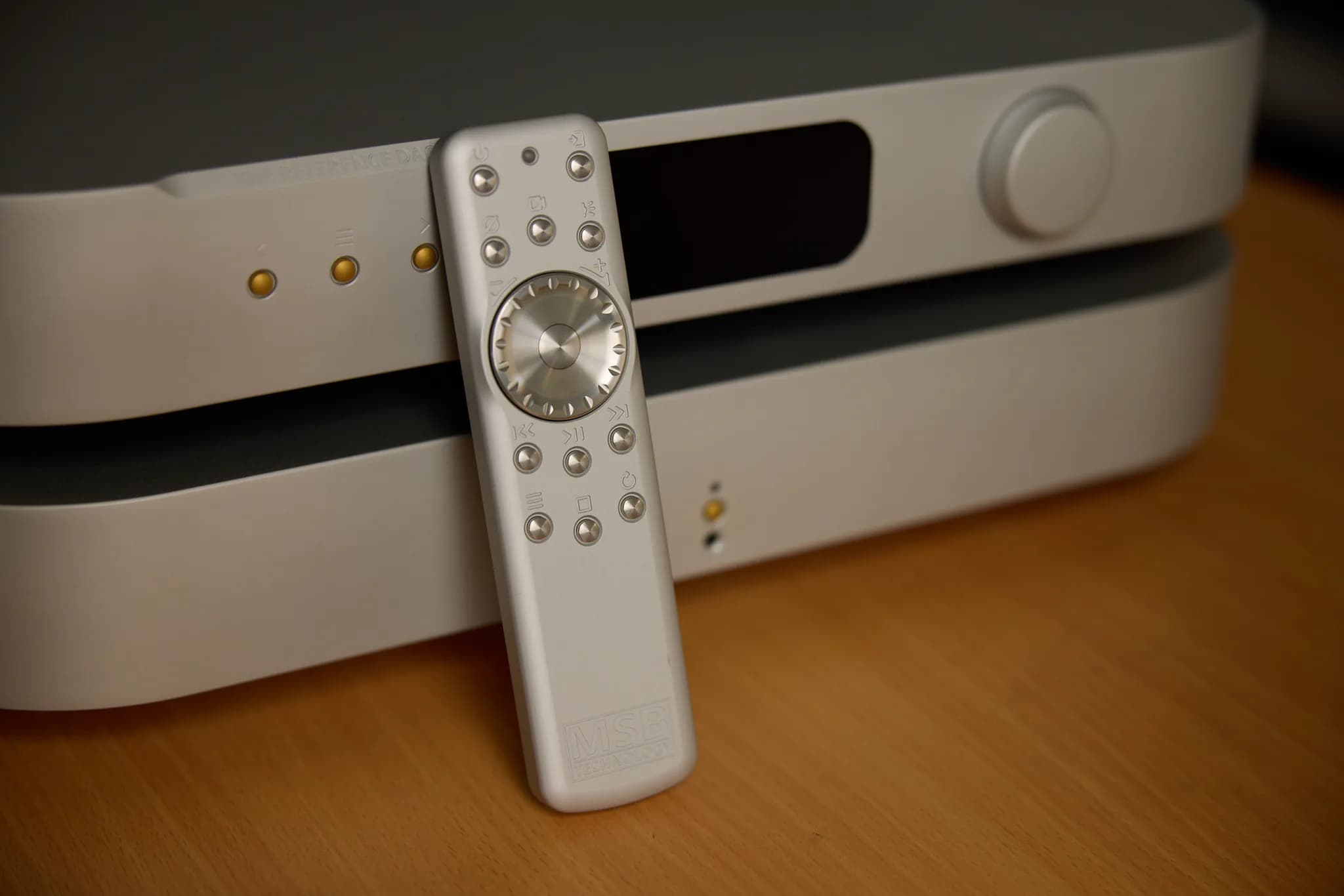
What this presentation will not suit
The Reference is unlikely to satisfy every preference. It does not turn every recording into the same rich, forgiving presentation. A listener seeking pronounced valve-like density or consistently softened edges may prefer a product with a stronger tonal signature.
Direct passive connection also depends on the load and gain structure. Long interconnects, low input impedance, multiple driven outputs or a need for active gain may favour a high-quality active preamplifier. A room with strong low-frequency decay or unmanaged first reflections can mask the very qualities described here.
Transparency is not a substitute for system design. It can make an unresolved system easier to hear.
Listening for these differences at an audition
I find several familiar recordings more useful than one demonstration track. Matching the level and keeping the input unchanged make differences easier to follow. Where the equipment allows it, a comparison with and without the preamplifier can also be informative.
The useful question is not whether the new DAC reveals a sound you had never noticed. It is whether familiar music becomes easier to follow as performance, and whether that remains true after the novelty has disappeared.
Read the complete Reference review or request an MSB private audition.