
Start by separating platform price from configured price
The Reference entered the Australian market in 2017 with a reported starting price of $55,000. The late-2022 unit used for this series had an original configured Australian price of $85,000.
That difference should not be described as a simple price rise. The later unit includes a high-level clock, passive analogue preamplifier output, network renderer and complete Pro USB path. Its price reflected the installed configuration as well as the underlying platform.
For a used buyer, the practical comparison is therefore not “what did a Reference cost?” It is “what exactly is installed in this Reference, what is included, and what does the system require?”
Start with these five parts
To understand a Reference configuration, look at five parts:
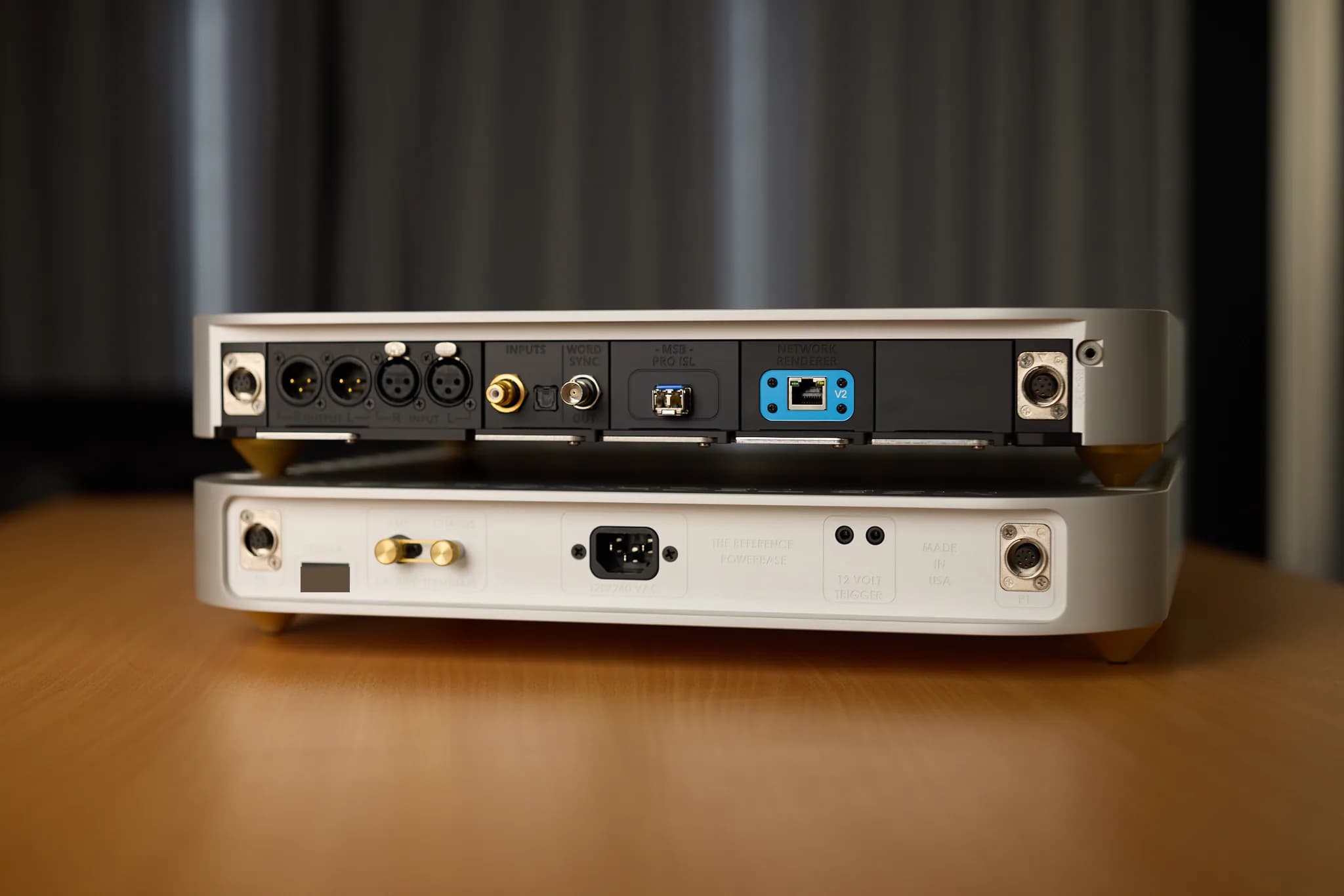
1. Conversion: four fully balanced MSB Hybrid DAC modules form the core platform. 2. Clock: the fitted Femto clock establishes the installed timing configuration. 3. Analogue output: the base output and optional passive preamplifier module offer different volume-control and connection options. 4. Power: the Powerbase arrangement, cables and mains configuration must be complete. 5. Digital inputs: Renderer, USB, Pro ISL, AES, SPDIF/Toslink and other modules determine how sources connect and which formats are available.
The conversion platform is important, but the remaining four layers decide whether the unit will perform the job expected of it.
1. The fitted clock module
Reference units may be encountered with Femto 140, Femto 77 or Femto 33 clock modules. MSB describes Femto 77 as having less than 77 femtoseconds of measurable jitter and Femto 33 as having less than 33 femtoseconds, with further attention to thermal and vibration control.
Avoid relying on phrases such as “top clock” or “upgraded clock”. Ask for the configuration documentation or a clear settings display, and confirm the serial number through an appropriate service or authorised channel where possible.
The fitted clock helps identify the configuration being priced. Compare like-for-like hardware when judging an offer, then listen to the complete system.
2. Identify the analogue output module
The optional Reference preamplifier output is more than an added volume knob. MSB specifies purely passive, constant-impedance analogue attenuation in 1 dB steps, with a 150-ohm balanced output and 3.57 Vrms maximum from digital inputs.
Its system value is that the DAC may be able to drive a suitable power amplifier directly, removing a separate active preamplifier and an extra pair of interconnects. That possibility still depends on input sensitivity, input impedance, cable length, required gain and the number of outputs being driven.
A buyer who intends to use an active preamplifier may not place the same value on this module as a buyer planning a direct system. The installed output therefore has to be judged against the intended architecture, not only its original option price.
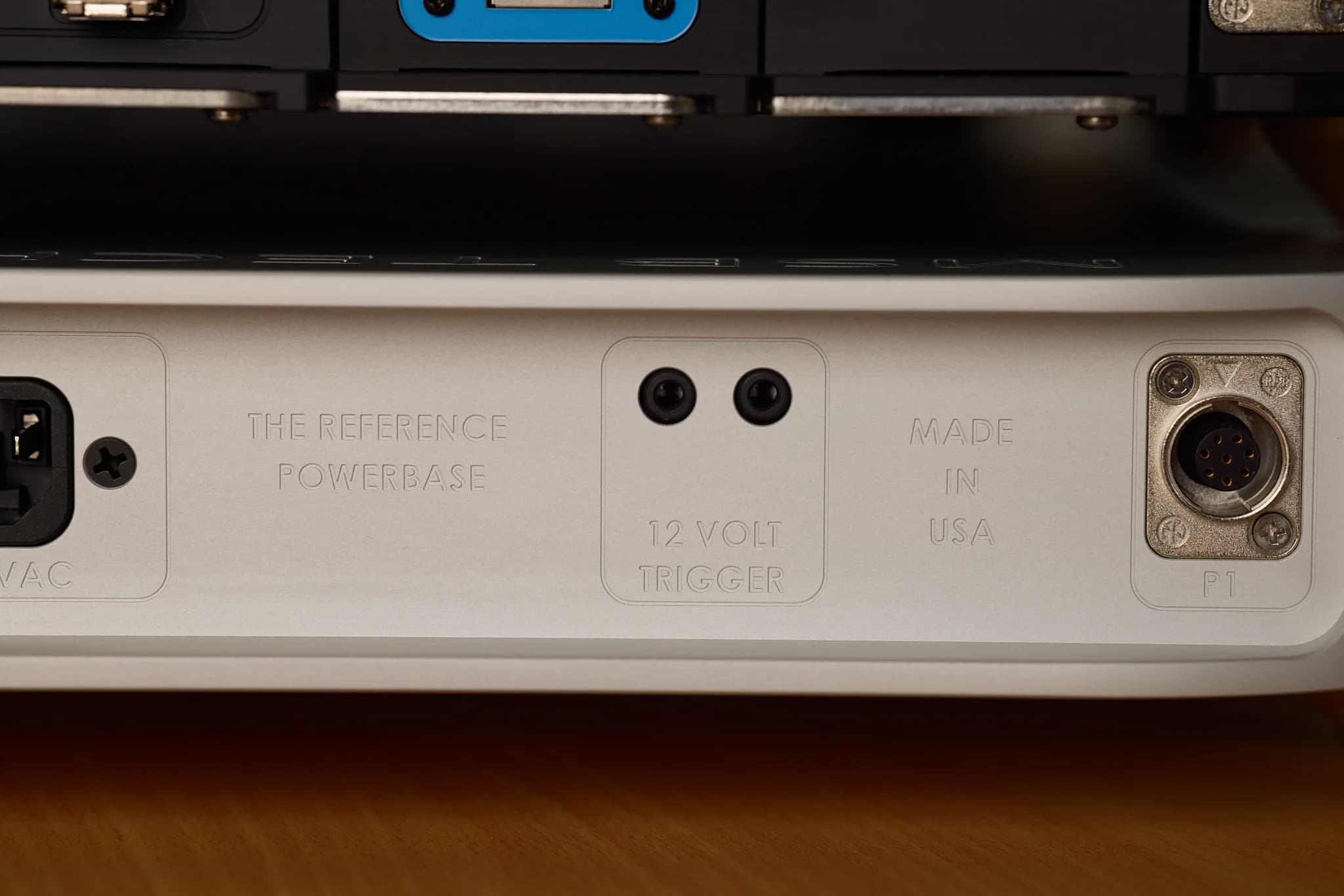
3. Check the Powerbase and included cables
Confirm the exact Powerbase configuration, correct mains version and every required connection. The official Reference specification lists the Powerbase with two Hybrid power cables, a ground cable and an IEC power cord.
Do not assume that a photographed second chassis proves the package is complete. Check the dedicated cables, remote, original packaging and any accessories needed for safe transport and setup.
Power-supply arrangements are part of the product architecture. Replacing a missing factory component with a generic external supply is not an equivalent configuration.
4. Treat every digital input as a separate item
“Includes USB” is not specific enough.
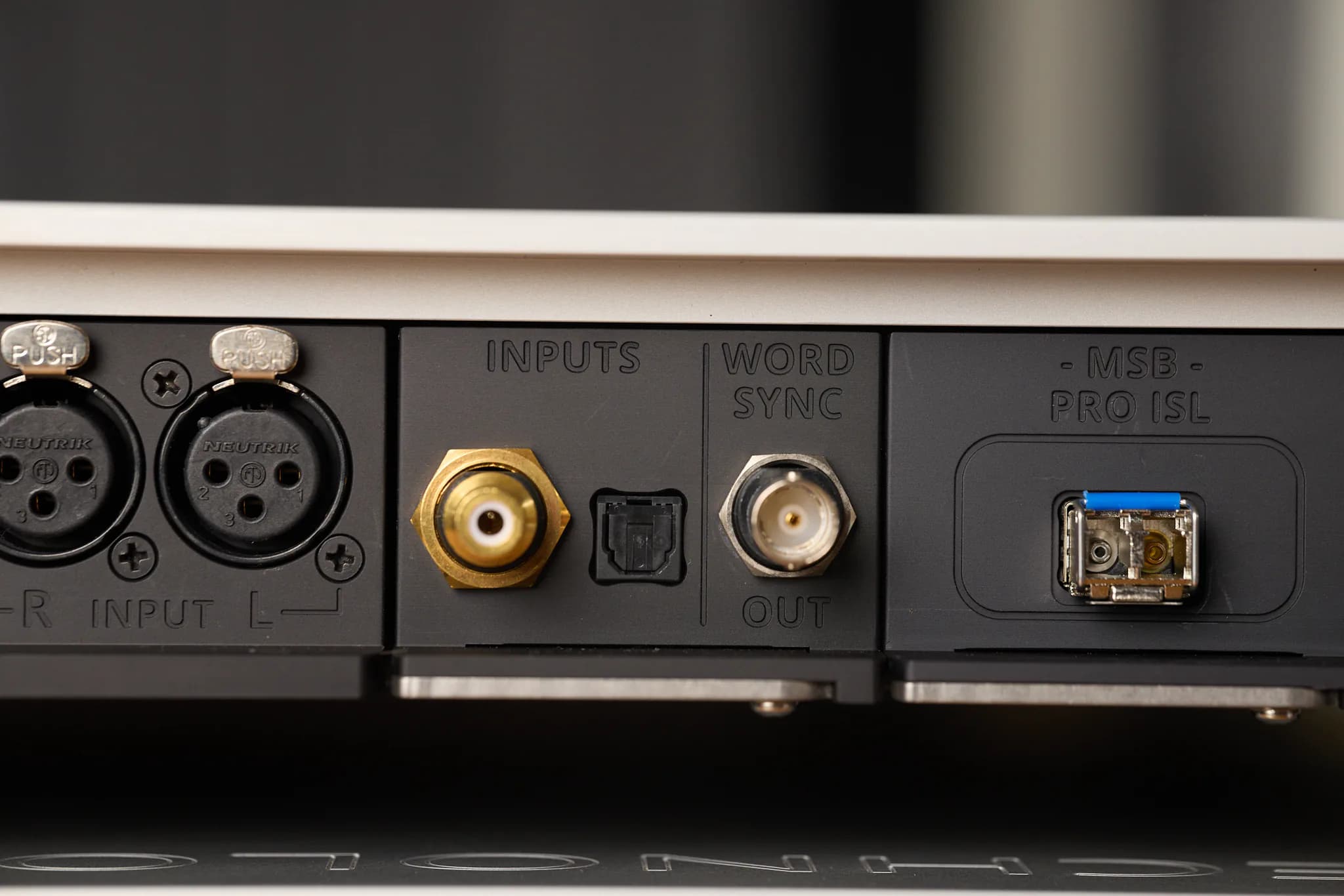
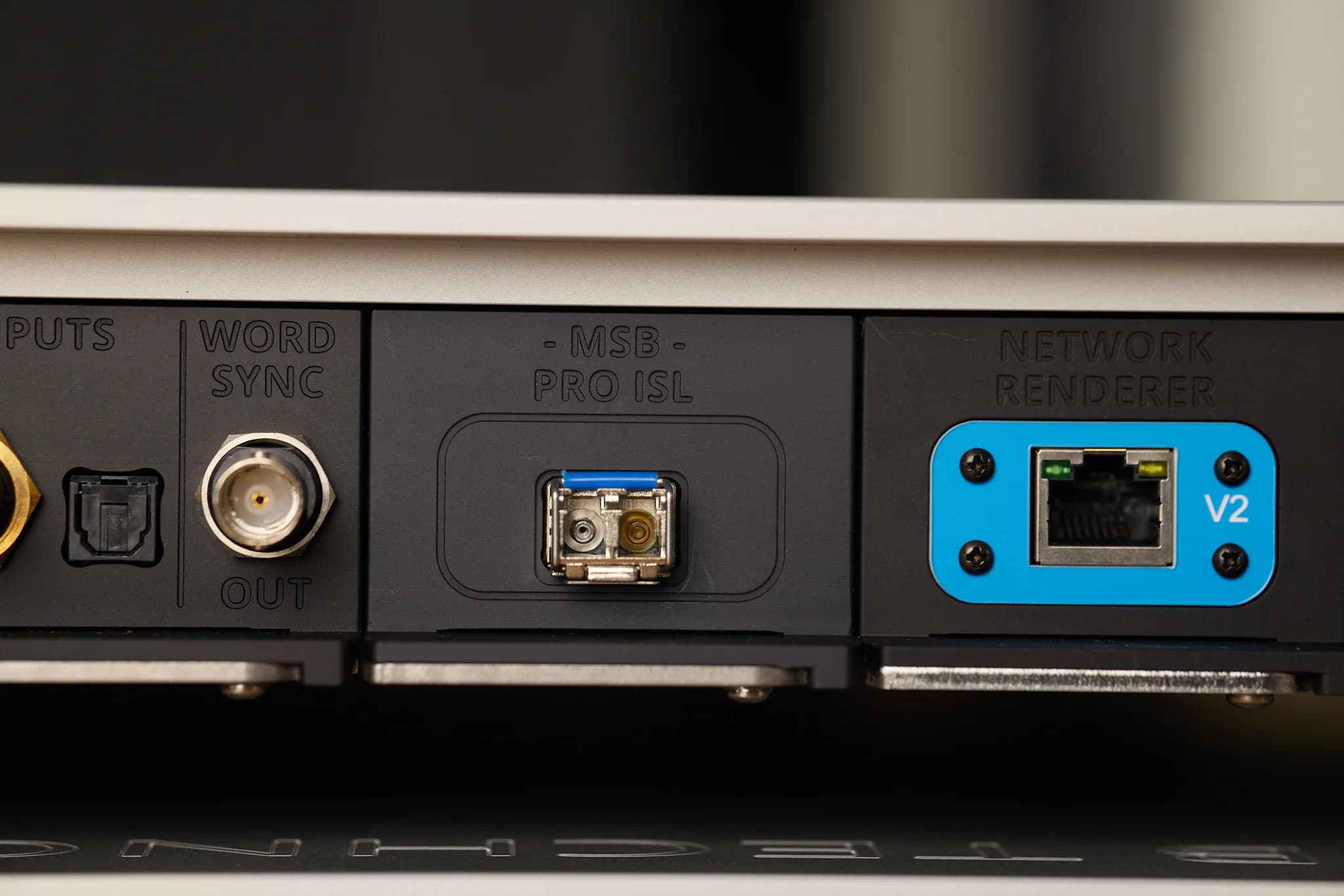
MSB’s Pro USB is a multi-part path: a server or computer connects to the external Pro USB interface; that interface converts the stream to Pro ISL; a Pro ISL input module and fibre cable complete the connection to the DAC. MSB specifies electrical isolation, up to 24-bit/768 kHz PCM and up to 8× DSD with supported firmware.
Renderer V2 is a different module. It turns the DAC into a network endpoint and currently supports Roon Ready, UPnP/DLNA and Qobuz Connect, with input-dependent capability up to 32-bit/768 kHz PCM and 4× DSD.
Conventional modules such as SPDIF/Toslink or AES serve different source requirements and may have lower format limits. Make a written list of every fitted module and every external part rather than accepting a bundle of acronyms.
5. Verify firmware, service and support
The Reference is discontinued, but MSB continues to host official documentation and firmware. Reference firmware version 39.21 was released on 16 April 2026, and the support page states that some upgrades and accessories may still be available.
That is encouraging, but it is not a promise that every historical part will remain available indefinitely. Before purchase, establish:
- serial number and manufacture date;
- installed DAC and Renderer firmware;
- service or repair history;
- whether any Digital Director is included or merely compatible;
- who provides the written used-product warranty;
- how assessment, shipping and repair will be handled in Australia.
At this price level, verbal reassurance should be converted into a written scope wherever possible.

A worked example: the late-2022 MSN Audio trade-in unit
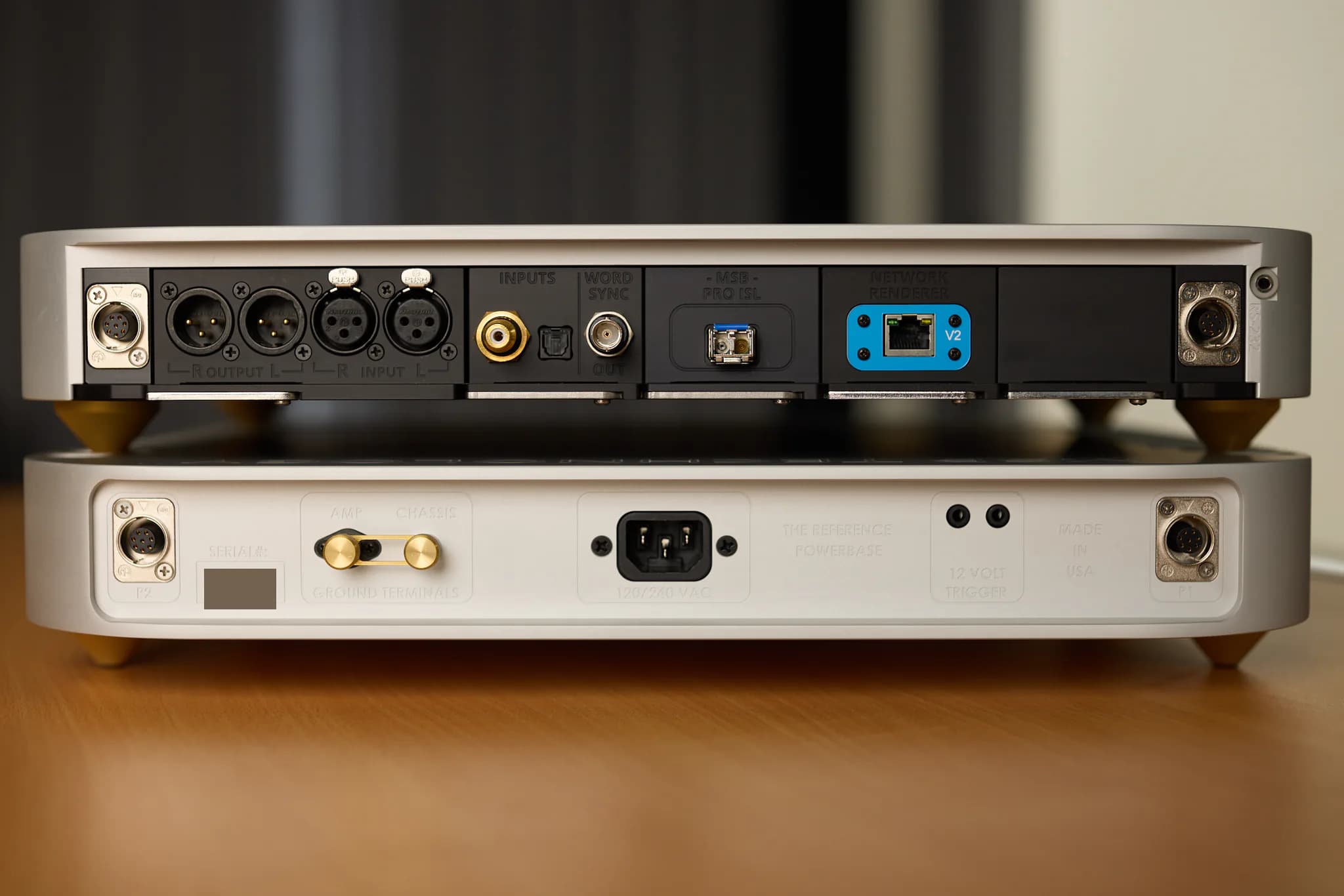
The individual Reference used in this series was manufactured in late 2022 and is listed with:
- four Hybrid DAC modules;
- Femto 33 clock;
- passive analogue preamplifier output;
- Single Powerbase;
- Renderer V2;
- SPDIF/Toslink input;
- complete Pro USB interface, Pro ISL input and fibre cable.
Its configured price when new was $85,000. At the time this guide was prepared, MSN Audio listed it at $42,500 with a six-month MSN Audio used-product warranty. Current price, availability, GST treatment, inclusions and terms must always be taken from the live listing.
The relevant comparison may be a new current-production DAC around the same budget, not merely another used Reference DAC. A new model offers current manufacture and full new-product support. A highly configured Reference offers access to a former higher-tier platform. Neither route is automatically more rational.
The used-buying checklist
Before committing, obtain a written answer for every item below:
- exact model, serial number and manufacture date;
- clock model;
- output module, output connections and maximum output voltage;
- Single or Dual Powerbase arrangement;
- every digital and analogue input module;
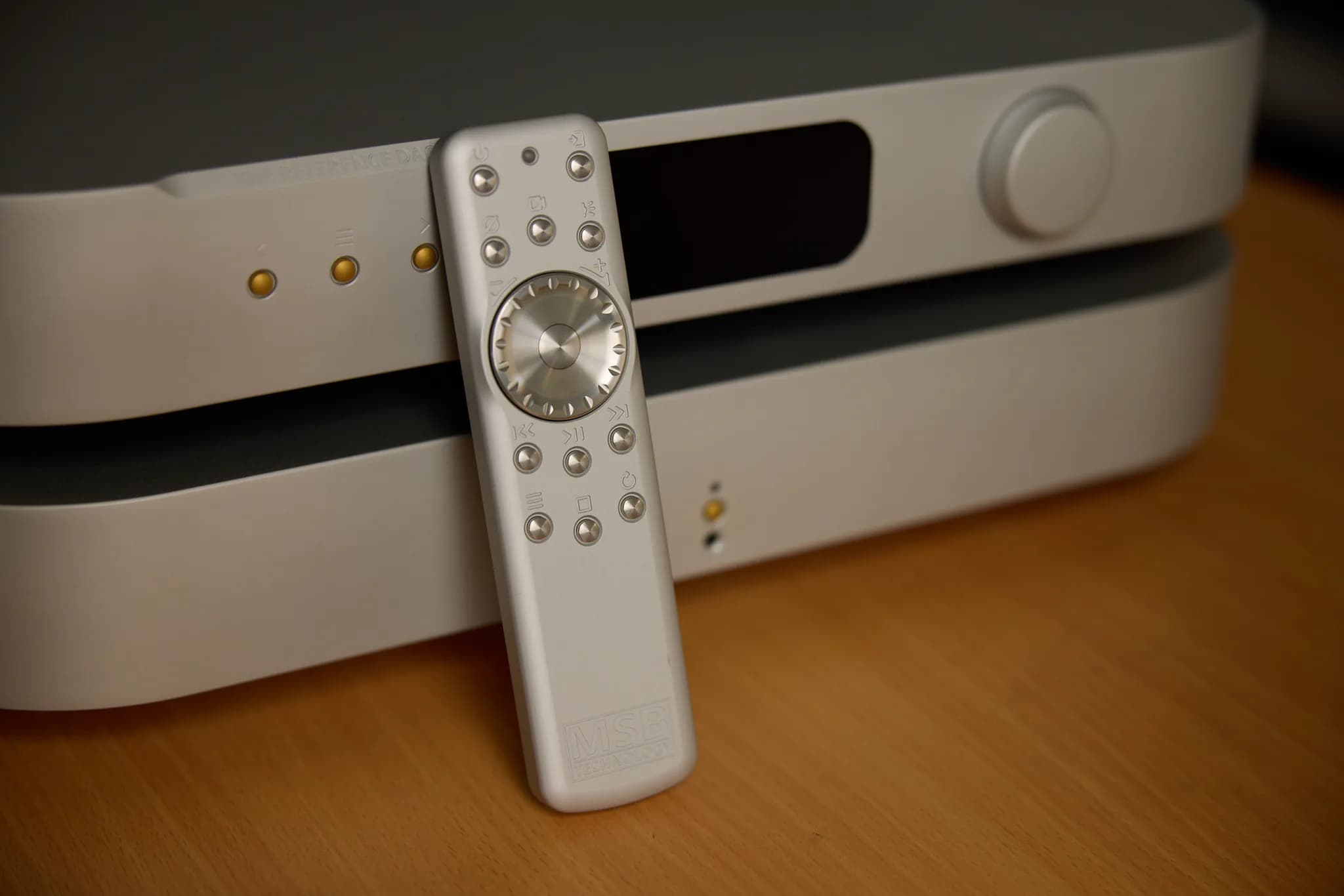
- all proprietary cables, interfaces, remote and packaging;
- firmware versions and update status;
- service, repair and ownership history;
- voltage and Australian electrical suitability;
- condition confirmed with current photographs;
- warranty provider, duration, exclusions and claim process;
- audition, shipping and return terms.
The correct question is not simply whether the product is a Reference. It is whether this exact Reference has the configuration, condition and support required for the system it will enter.
View the individual MSN Audio trade-in listing or continue with MSB Hybrid DAC explained.