Bring the detail in the recording into everyday listening.
From a compact desktop system to a dedicated listening room, explore PSI Audio active loudspeakers by listening distance, the volume you enjoy and the equipment you already use.
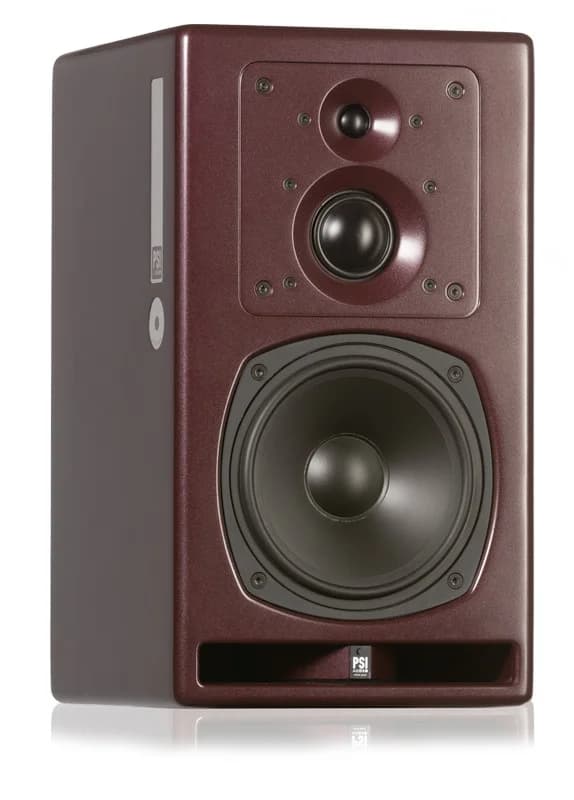
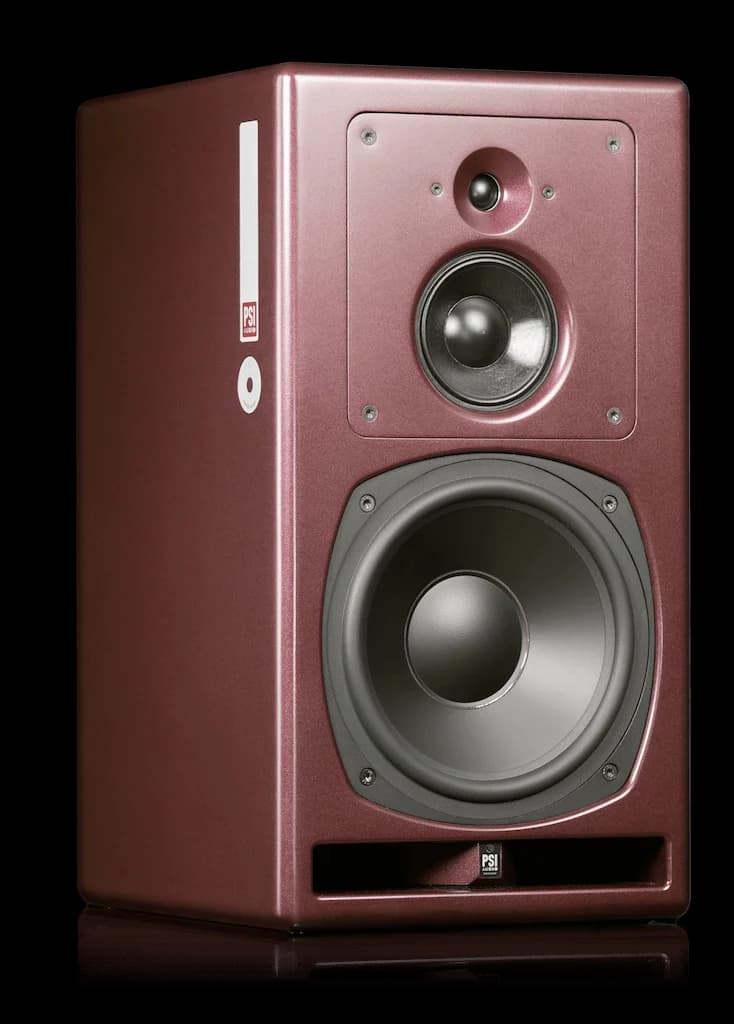
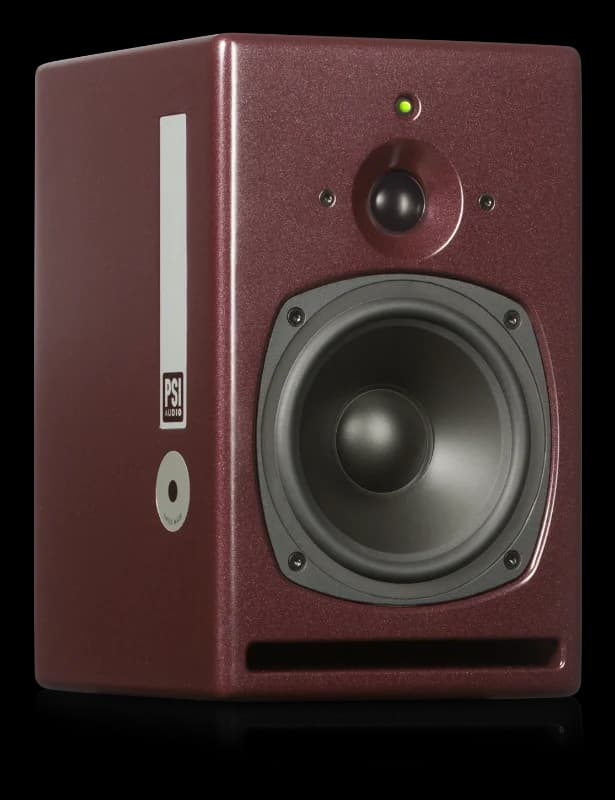
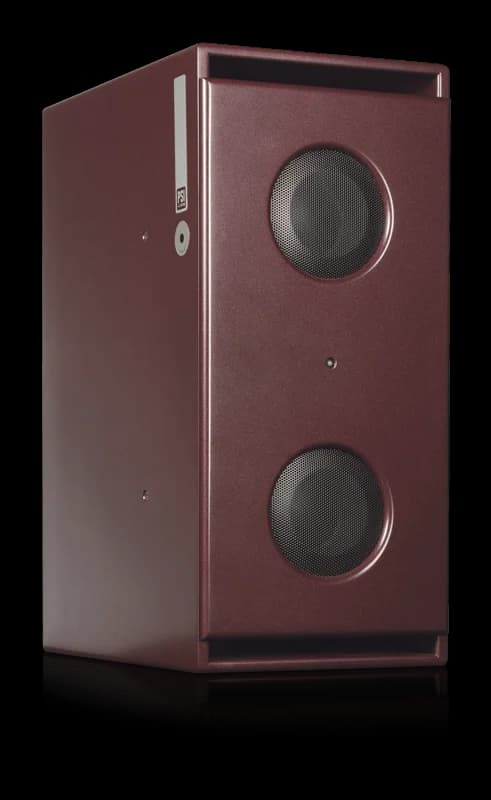
A23-M: a compact three-way active loudspeaker, shown in Studio Red.
Why consider PSI at home?
01
Get closer to the recording
PSI designs for accurate amplitude and phase response, aiming to preserve the balance and timing in a recording. In an audition, listen to familiar voices, instrument positions and how the parts hold together in busy music.
02
The amplification is already matched
The drivers, analogue crossover and amplifiers are designed together. Connect a source with analogue output and volume control, and you have the essentials of a music system without a separate power amplifier.
03
Every speaker individually calibrated
PSI measures and calibrates every speaker in Switzerland against its reference response before it leaves the factory. This controls the speaker’s response; your room and placement remain part of the listening setup.
A23-M or A25-M?
Both have a dedicated midrange and built-in amplification. A23-M is smaller and lighter; A25-M offers deeper bass and more output. Here is how the size and price compare.
Allow extra space for cables, ventilation and stands. Listening distances are PSI’s setup guide.
A23-M gives you a smaller, lighter three-way speaker. A25-M uses an EXD midrange and extends further into the bass, with more cabinet to accommodate. A Studio Red pair of A25-M costs A$4,600 more. Compare them at your usual listening distance and volume.
A three-way active speaker that brings a dedicated midrange into a smaller cabinet than A25-M. Built-in amplification lets you build a music system around your source, volume control and a pair of speakers.
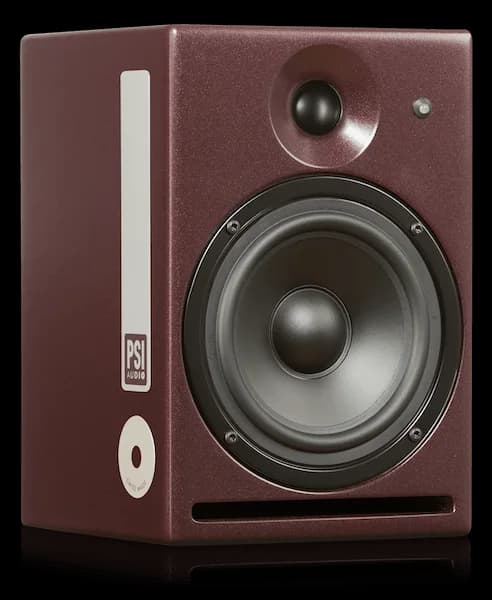
A three-way active speaker for a main music system with room for a larger cabinet. A25-M combines a dedicated EXD midrange with deeper bass extension and greater output capacity than A23-M.
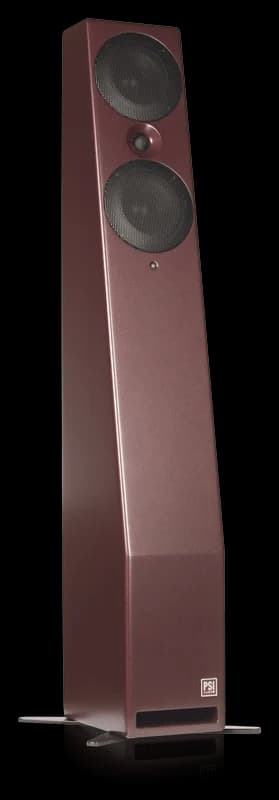
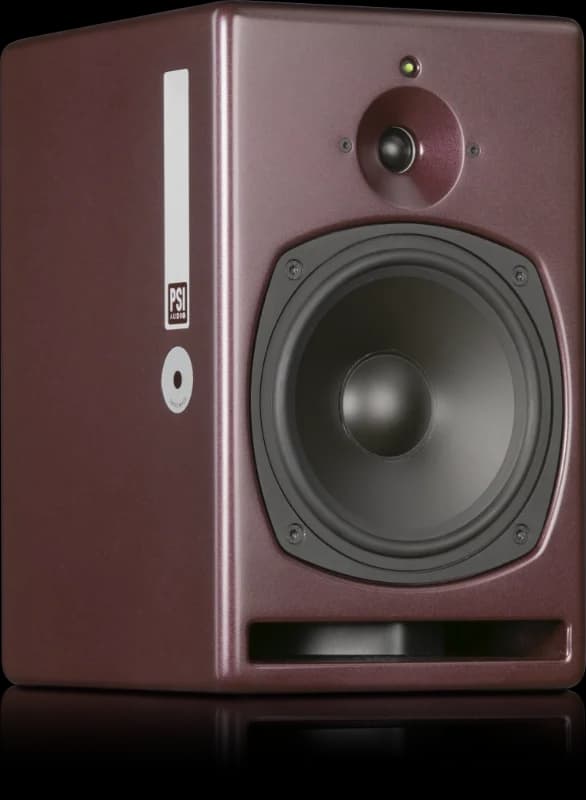
Choose a compact speaker for the desk, a larger pair on stands, a slim floorstander or a centre speaker for the screen. Each connects to an analogue source and its own mains socket.
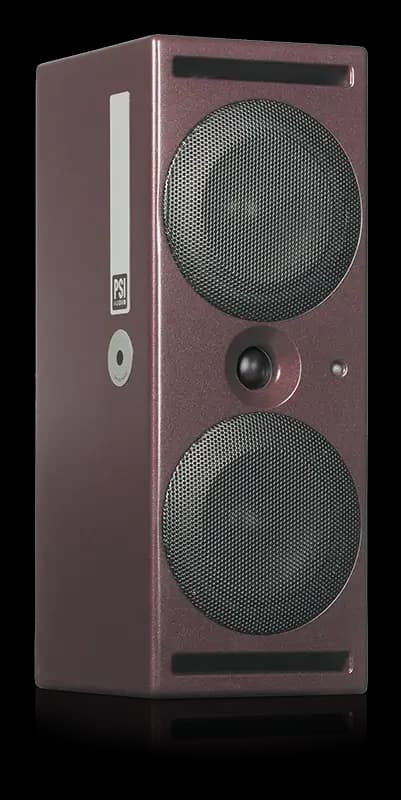
A slim active floorstander that needs no separate speaker stands. Its D’Appolito arrangement places a tweeter between two bass/mid drivers in a two-way design.
A two-way active speaker for a stand-mounted music system. Its larger bass/mid driver gives it more bass extension and output capacity than A17-M, with a cabinet sized for listening beyond the desk.
A compact two-way active speaker for a spacious desk or a pair of stands close to your listening seat. It offers more bass extension than A14-M without moving up to the larger A21-M cabinet.
A small two-way active speaker for desktop and close listening. It is the most compact choice in this range for enjoying music when the speakers sit within easy reach.
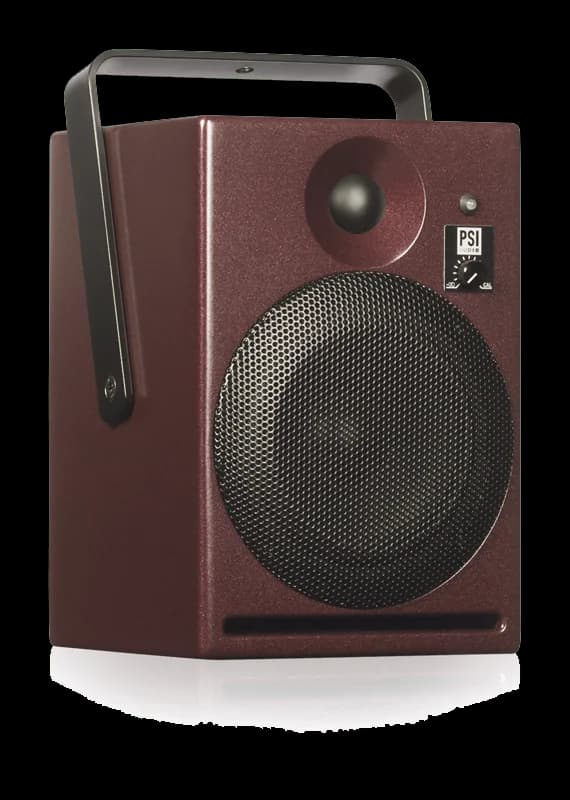
A compact active speaker with a metal grille and front level control for fixed installations and multichannel systems. It shares A14-M Studio’s acoustic specifications in a cabinet designed for easier protection and access.
An active centre speaker for film dialogue and multichannel music. Its narrow cabinet can sit horizontally near a screen, with amplification already built in.
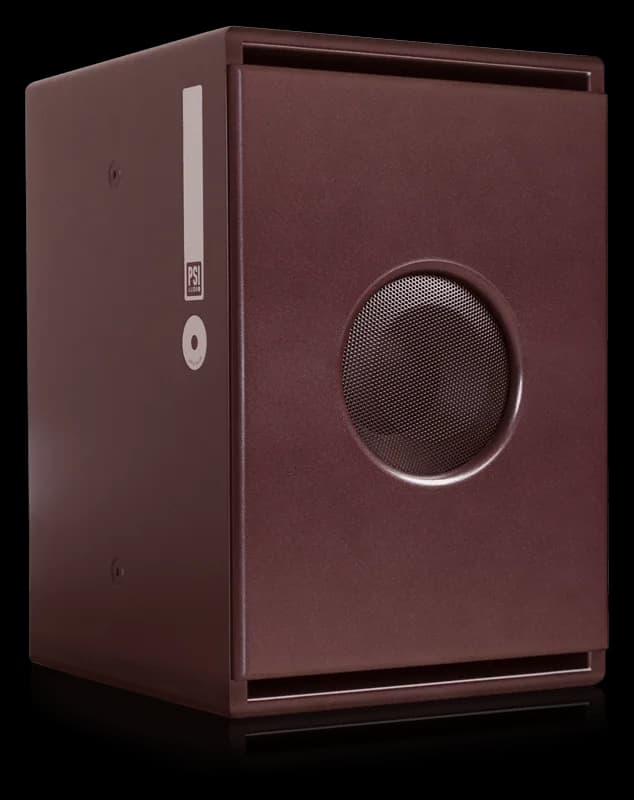
Sub A125-M is the compact choice for adding low bass. The larger, dual-driver A225-M reaches deeper and has more output capacity. Both connect to the music system and work alongside the main speakers.
A dual-driver active subwoofer for music and cinema systems that need deeper bass and more low-frequency output. Its larger cabinet makes it the higher-capacity choice alongside Sub A125-M.
A compact active subwoofer for adding deeper bass to a music system. It takes up less room than Sub A225-M and pairs naturally in size with PSI’s smaller speakers.
When the note has stopped but bass keeps ringing in the room, AVAA is the part of the range to explore. C214 and C225 absorb low-frequency energy without an audio cable. Unlike Sub A225-M, they do not play bass from the recording.
C214 or C225?
C214 has a slimmer cabinet for listening rooms and operates from 15 to 160 Hz. C225 works from 12 to 130 Hz, with greater operating headroom for powerful home cinema and high-level listening. Compare your usual volume and placement space, then look at the bass decay in the room.
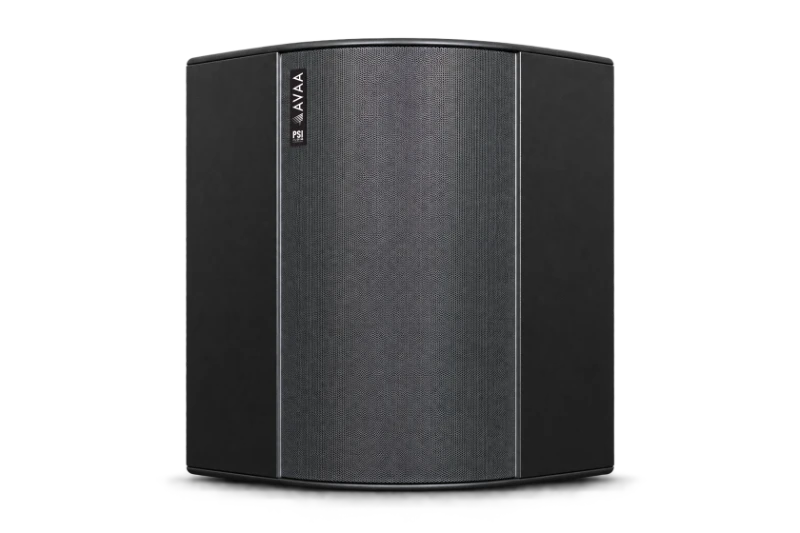
For bass notes that linger in the room. C214 absorbs low-frequency energy from 15 to 160 Hz in a slim cabinet, without an audio connection.
$6,199
5-year standard Australian warranty1 extra year after product registrationPrice per unit, including GST.Usually arrives within 2 to 3 business days, subject to order confirmation.
An active bass absorber for powerful home cinema and high-level listening. C225 works from 12 to 130 Hz, with a larger cabinet and greater operating headroom than C214.
$11,999
5-year standard Australian warranty1 extra year after product registrationPrice per unit, including GST.Order by enquiry. Current stock and delivery timing are confirmed before payment.
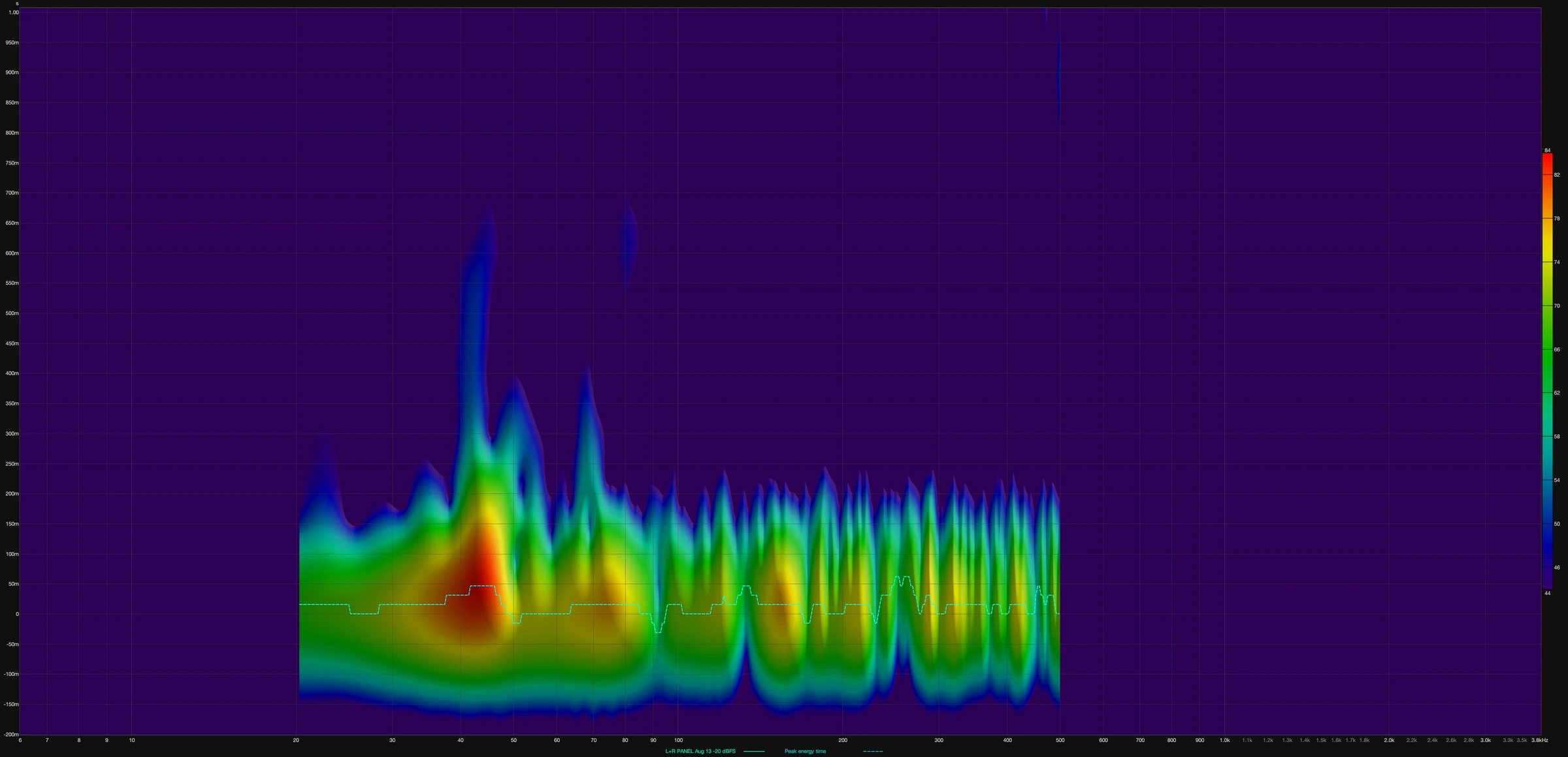
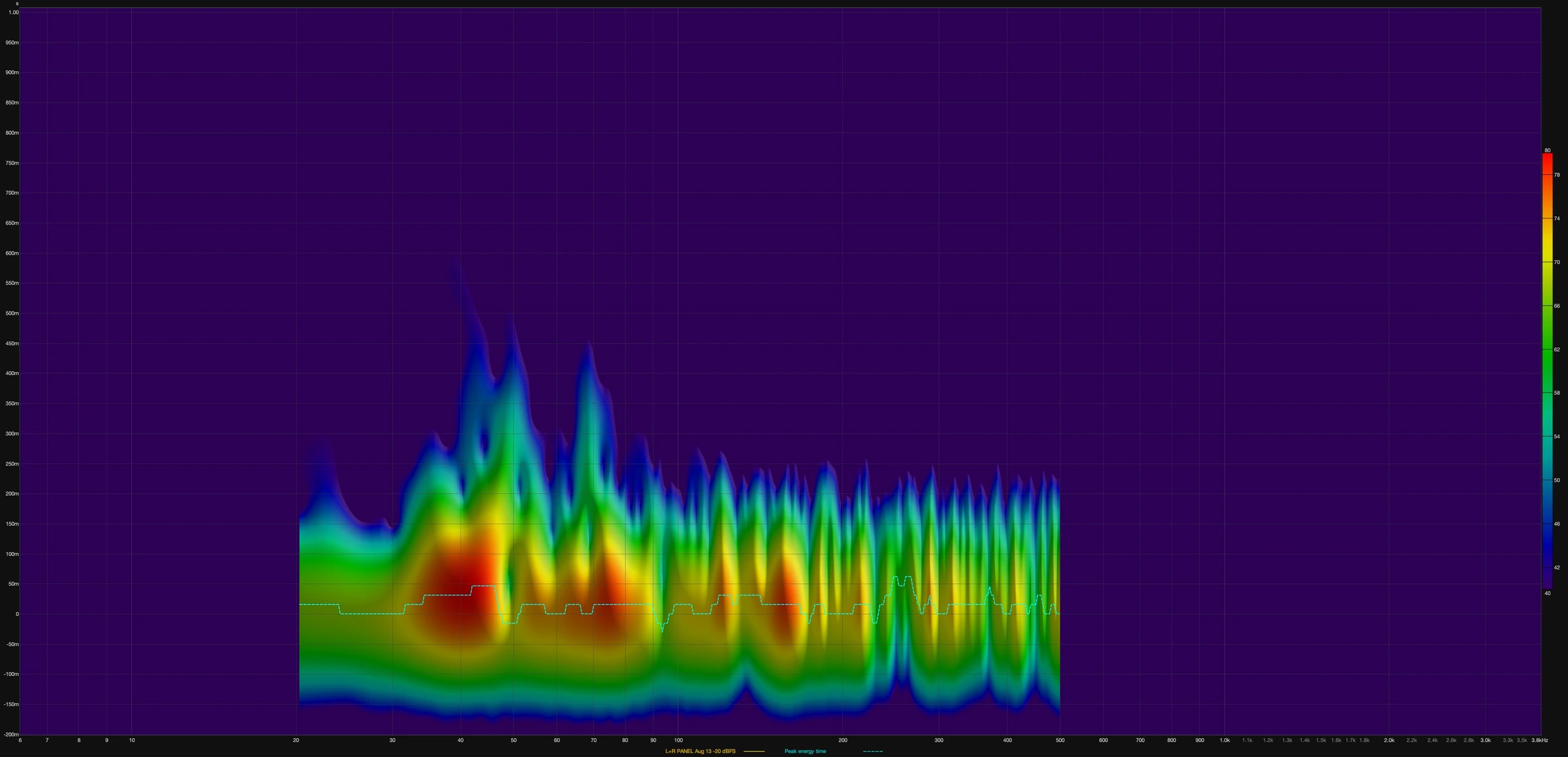
In this Melbourne room, we compared the combined left and right speakers before and after AVAA C214. These spectrograms show frequency, level and time together. Look at how far the low-frequency trails extend as the sound fades.
Before
Before: combined L+R spectrogram with longer visible low-frequency tails.
After
After: combined L+R spectrogram under the comparison condition.
The measured low-frequency tails became shorter with C214 operating. The full case includes the test conditions, graph explanations and remaining issues.
These measurements describe this Melbourne room. The full case explains the setup and comparison conditions.
Building a music system, adding deeper bass or addressing bass that lingers? Choose a direction below, then open a model page to talk to us about your equipment, ordering or audition options.